
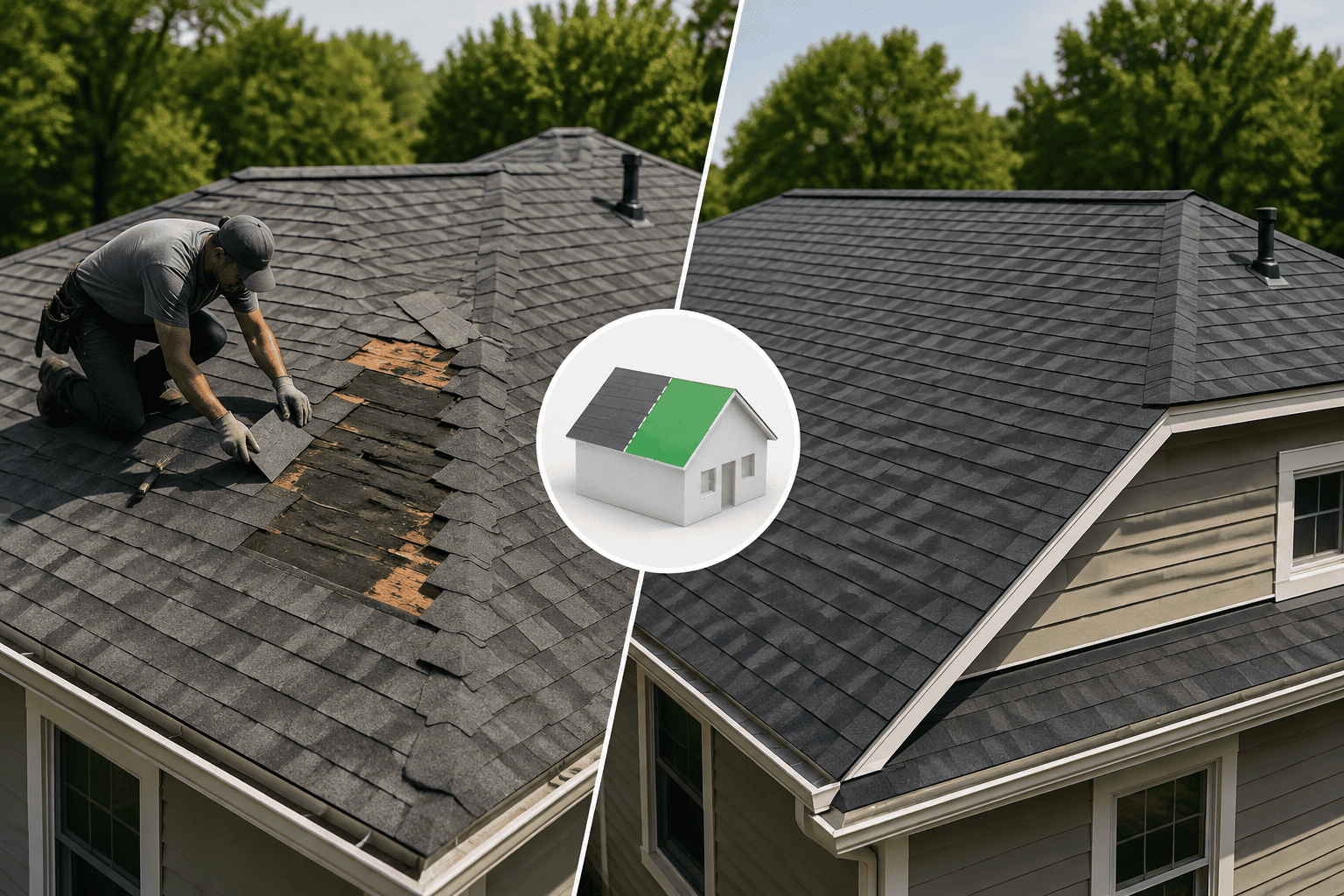
When your property is affected by severe weather, a fallen tree branch, or a sudden leak, your immediate thoughts tend to focus on the potential cost involved. Whether it be a couple of hundred dollars for a temporary fix, or several thousand dollars for a complete replacement. There comes the 25% roofing rule comes into play. Let’s explore this topic in detail.
If you need professional guidance to assess your roofing needs, Trident Commercial Roofing provides reliable commercial roofing solutions to help protect your property and make the right decision.
How to Successfully Navigate the 25% Rule for Roofing with No Financial Stress
For many people who own property, finding out that there is damage can feel like they have been hit over the head with the blunt end of their own bank account. However, if you understand the local building codes, the equation may change completely. A great result of understanding the local building codes is knowing how to utilize the following specific types of code-mandated building codes to your benefit.
Understanding how the 25% Roofing Law is applied allows you to utilize insurance policies effectively; you can avoid doing illegal or unsafe repairs, and you may be able to obtain a completely new building code-compliant roof for little or no money out of pocket. Having clear and concise knowledge about the 25% Roofing regulations gives you control over the recovery of your property, instead of fear.
What is the 25% Roofing Rule? The Roof Repair vs Replacement Threshold
The 25% Rule determines if a roof can be repaired instead of being replaced if the damage done to the roof exceeds at least 25% of the roof itself within any one year. The International Building Codes (IBC) are referenced within this type of legal determination to identify the threshold for determining whether or not the roof has been significantly repaired (for purposes of requiring the replacement of existing materials).
Decoding the International Building Code Materials
The IBC states that if greater than 25% of a roof (or a particular section of the roof) has had significant repairs made, the entire roofing system must be removed and replaced in accordance with the IBC.
The Building Department’s enforceability of this rule is directly related to the overall safety of the structure. A roof that has had many patch jobs across a large area creates an inconsistent surface, utilizes old underlayment that is susceptible to hidden wood rot, and significantly diminishes the wind uplift and water resistance of the structure.
How a “Roof Section” is Defined Graphically
A common belief is that when you cause damage to your back porch roof that is greater than or equal to 26% of its area, you must replace the entire roof on your two-story home. This is not how the Building Code defines this calculation; this measurement is calculated based on the individual roof section or plane.
The architectural features (i.e., ridges, hips, valleys, parapet walls, and elevation changes) serve as structural boundaries for the roof sections.
As an example, if a storm caused damage to 30% of the roof area of a single slope on a detached garage, then only that garage roof section would trigger the requirement for the roof to be replaced, a condition required by the Building Code.
In this case, that would not impact the calculation of the roof replacement for the main house, which has not been affected.
Florida is Unique 2026’s Legislative Changes Impact Your Future
As a result of significant updates to the Florida Building Code through new legislation (e.g., Senate Bill 4-D), there are now additional exceptions to the previously rigid application of the “25%” rule for repair of structures when they become “totaled” due to severe weather events (e.g., hurricanes).
If your existing roof is constructed, permitted, and installed in compliance with the applicable Florida Building Code as of 2007 or later, then the requirement for replacing the entire roof due to localized repairs or roofing inspection will no longer apply
In other parts of the country, especially older properties and jurisdictions (e.g., North Carolina and Texas) that still enforce a strict “25%” rule in their municipal codes, there is a high likelihood that your property will also be affected.
How to Maximize Your Insurance with the 25% Rule
The 25% rule is one of the best advantages that a property owner has when making a property insurance claim; this residential roofing rule permits you to convert a small payment for repairs into a much larger upgrade for a property.
Where Adjusters Fail to Apply Building Codes
When an insurance adjuster comes out after a hail or windstorm to inspect your roof, they are primarily concerned with how much money they have to pay out to you as a result of that damage. They typically rely on an estimate created by estimating software that provides estimates for small, localized patch repairs while purposely disregarding local building codes for a complete roof replacement that may apply to the patchwork of repairs required on your roof.
However, if the local building authority looks at the damage done to your roof and finds that it exceeds the 25% line, they will not issue you a building permit to do the patchwork repairs to your roof that the insurance company is trying to pay you to do. If you can prove that the damage done to your roof exceeds 25%, the insurance company must reimburse you for the entire cost of the replacement of the roof, because an insurance company cannot legally force you to perform an illegal or unpermitted repair.
The Impact of Code Changes and Ordinance Coverage for Building Repairs
When your home has suffered damage from a covered loss and requires a complete roofing replacement, your insurance policy must provide coverage not just for the cost of the shingles, but also for the cost of bringing the entire roofing assembly into compliance with current building standards (as of 2026). Current building codes (including ice and water shield requirements in valleys, synthetic underlayment requirements, and newly adopted wind rating requirements for certain fasteners) are in effect.
Why Using a Knowledgeable Professional Contractor to Assist With Handling a 25% Rule Claim is Important.
Do not attempt to measure your roof or evaluate the percentage of damage without professionally trained eyes and experience in dealing with major or catastrophic losses. When dealing with multi-billion-dollar insurance carriers, you will be required to provide evidence of the extent of the damage and the cause of any code violations factually and objectively, ensuring that the roof repair limits are met.
Using a Certified and Licensed Roofing Contractor Will Provide Three Primary Benefits:
1. Aerial Digital Mapping: By employing digital aerial drone mapping and satellite imaging technologies, roofing professionals can determine the number of shingles that are on each portion of the roof to within a few inches.
2. Identifying & Documenting “Tie-In” Issues: Replacing roof shingles requires that an area that has suffered damage cannot simply be re-shingled by cutting out the damaged portion only; therefore, the contractor must lift and disturb adjacent brittle shingles so the new shingles can be installed.
Conclusion
In conclusion, protecting your home structurally means incurring some expense related to roof repairs because of the 25% roof patch rule. While the 25% roof patch rule may seem like a nuisance initially, it is a strong consumer protection tool.
Once you know how your roof sections are calculated, and you can utilize subject matter experts (code-compliant roofing professionals) to properly document the facts about the roof sections, post-storm events will turn into quality projects that protect your home(s) equity for years to come.
FAQs
How do adjusters calculate if damage crosses the 25% threshold?
Adjusters divide the exact square footage of the physically impacted area (plus the necessary surrounding shingles disturbed during a repair) by the total square footage of that specific, isolated roof slope, not the total square footage of the entire house.
Does the 25% rule apply to all states?
Yes, it applies in any municipality across the country that has formally adopted the International Residential Code (IRC) or International Building Code (IBC).
Can my insurance company deny a full replacement if local code requires it?
No. If local building officials legally refuse to issue a repair permit because the damage exceeds 25%, your insurance company is legally obligated to fund a full replacement under standard “Law and Ordinance” policy provisions.
Does the 25% damage accumulation reset after a calendar year?
No, the rule monitors a rolling 12-month period. Any separate storm damage events or piecemeal patch repairs completed within 12 consecutive months stack together toward that final 25% calculation.
What happens if my roof section features two different types of materials?
Under modern building codes, a distinct shift in materials, such as transitioning from an architectural asphalt shingle slope down to a flat TPO membrane section.