
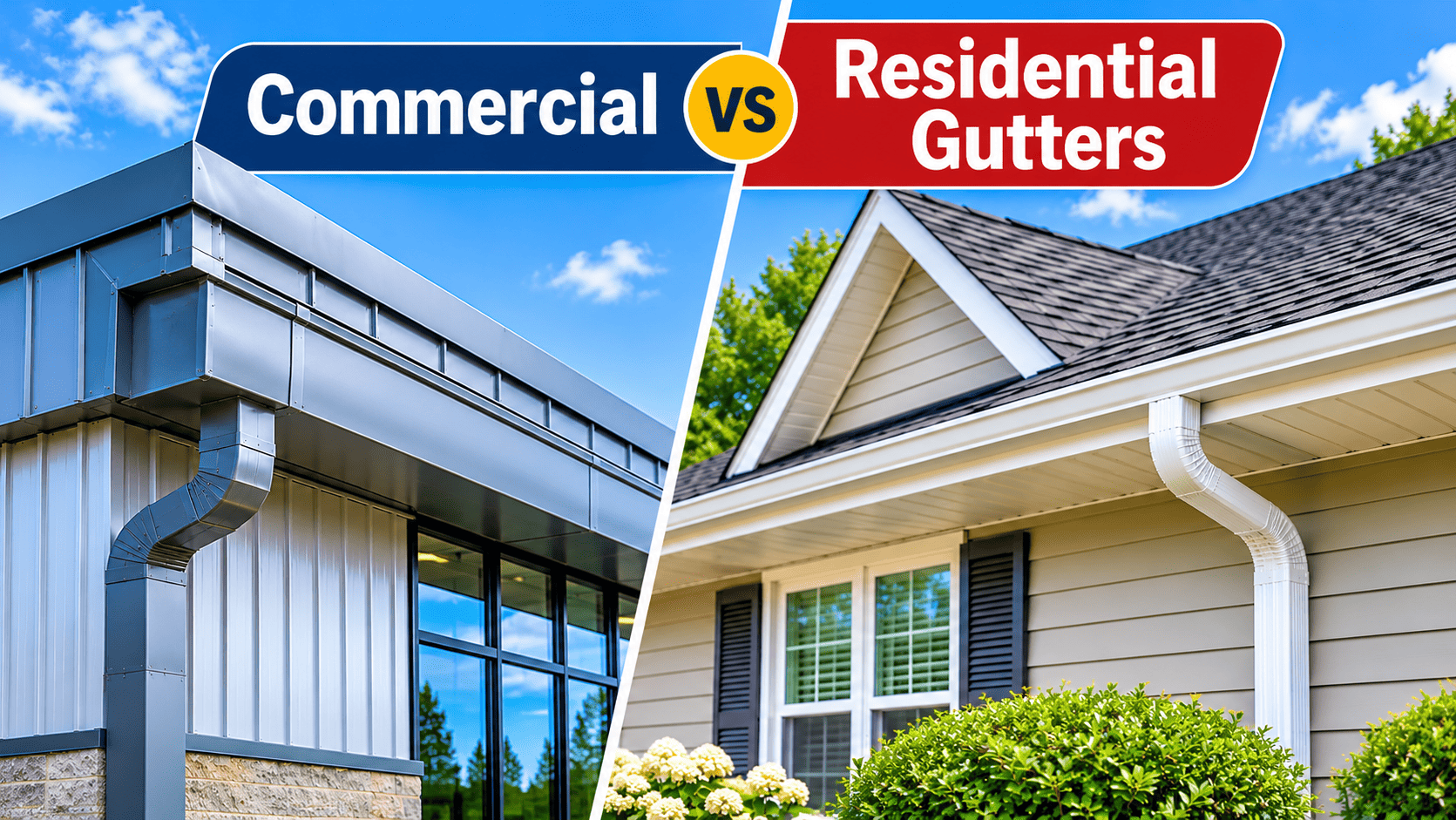
Water is a building’s greatest enemy. Without a proper drainage system, rainwater can quickly destroy foundations, ruin landscaping, and cause costly internal leaks.
Choosing the wrong drainage system can lead to severe structural water damage. Understanding your building’s specific roofline needs is the first step toward lasting protection, which is why Trident Commercial Roofing has prepared a guide that addresses the difference between commercial and residential gutters so you can choose the right one for your property’s specific needs.
What is the Difference Between Commercial and Residential Gutters?
Most property owners are unaware of the fact that there are certain differences between commercial and residential gutters that can make or break the entire structure.
If you are also wondering what the difference between commercial and residential gutters is, then you must know that the size, shape, legal regulations, and water volume capacity vary for each system.
Size and Capacity:
Commercial systems are significantly larger to handle massive roof runoff.
Architectural Shapes:
Residential properties use stylized K-style tracks, while commercial builds use box styles.
Legal Compliance:
Commercial systems must follow strict local building codes and regional environmental laws.
While both styles serve the exact same core purpose, their engineering and installation methods are completely distinct.
The Core Differences Explained
Property owners often ask why they cannot use the same drainage setups for all buildings. The answer comes down to architectural scale and roof design.
| Feature | Residential Gutter Systems | Commercial Gutter Systems |
| Standard Size | 5-inch or 6-inch | 6-inch, 7-inch, or larger |
| Common Style | K-Style or Half-Round | Box-Style |
| Water Volume | Moderate capacity | Extremely high capacity |
Analyzing commercial vs residential gutters reveals that commercial variants are built for heavy-duty endurance. They deal with large amounts of rainwater on extensive flat roofs.
Materials, Engineering, and Capacity: A Comparison
One of the biggest factors to consider when comparing the differences between commercial and residential gutters is material. A warehouse and a family residence have completely different structural needs.
Heavy-Duty Infrastructure
Industrial buildings have large roof surfaces where thousands of gallons of water are collected. For flat roofs, strong commercial gutter systems get rid of pooling water.
Thicker Gauges:
Commercial channels are made of slightly thicker aluminum or heavy galvanized steel.
Box Configurations:
Box configurations are designed to get water flowing through without debris clogs.
External Brackets:
These are heavy steel hangers that attach the system to secure it against high winds and snow loads.
Home Drainage Needs
The common residential gutter installation design is more about the aesthetics and curb appeal of your living space.
Seamless Aluminum:
Lightweight, rust-proof lines in your home’s trim that match your home’s color.
Hidden Hangers:
Fasteners fit into a channel to bring out a clean profile of the exterior.
Flexible Sizing:
Standard pitched residential roof slopes are designed to fit a variety of sizes.
Commercial gutter materials such as high-quality copper or steel can protect an industrial property by keeping it dry and structurally sound for many years without any signs of issues.
Choosing the Right System for Your Project
If you install the wrong system the right way, you will face similar consequences as installing the right system the wrong way.
If the system is improperly installed, it may result in a violation of building codes, erosion of your foundation, and other safety risks. Here are a few simple steps for choosing the right gutter system for your property.
Measure Your Roof
↓
Calculate the Pitch
↓
Review Local Safety Code
↓
Expert Fitting
Expert Assessment:
The roof’s actual pitch and local rainfall intensity are professionally determined.
Code Compliance:
Commercial installations may need special permits and zoning approvals.
Long-Term Protection:
Custom fabrication guarantees seamless corners and leak-free performance.
If you know the differences between commercial and residential gutters, it is likely that you are ready to secure your structural investment. Partnering with a dedicated contractor ensures your drainage system matches your building’s drainage needs perfectly.
Final Thoughts
Whether managing an industrial complex or a cozy home, proper water diversion is non-negotiable. Learning the difference between commercial and residential gutters helps in matching your structure with the correct drainage track that can keep your foundation safe and dry. Make sure to invest in professional installation to guarantee peace of mind.
Frequently Asked Questions
Can I install commercial gutters on my residential space?
Yes, you can install a commercial gutter system in a larger residential space with massive or steep rooflines, but not vice versa.
Why are commercial gutters usually shaped like a box?
The box shape holds a much higher volume of water than decorative residential styles.
How often should commercial drainage systems be cleaned?
Commercial gutter systems must be checked and cleaned twice a year at the very least to avoid big clogs.
Which gutter material lasts the longest for commercial properties?
For industrial applications, heavy galvanized steel and copper have the longest lifespans.
Do commercial systems need any building permits?
Yes, most local municipalities have very strict commercial building codes with regard to water runoff management.