The safety of your business is essential for your growth, so choosing commercial roof systems is a big decision every business owner has to make once in a lifetime. The type of infrastructure and materials you select will have a direct influence on your energy costs, maintenance expenses, and building safety.
Trident Commercial Roofing has prepared a guide on the most common commercial roofing types to help business owners confidently choose the best roofing solution for their property.
What Is the Most Common Type of Commercial Roof?
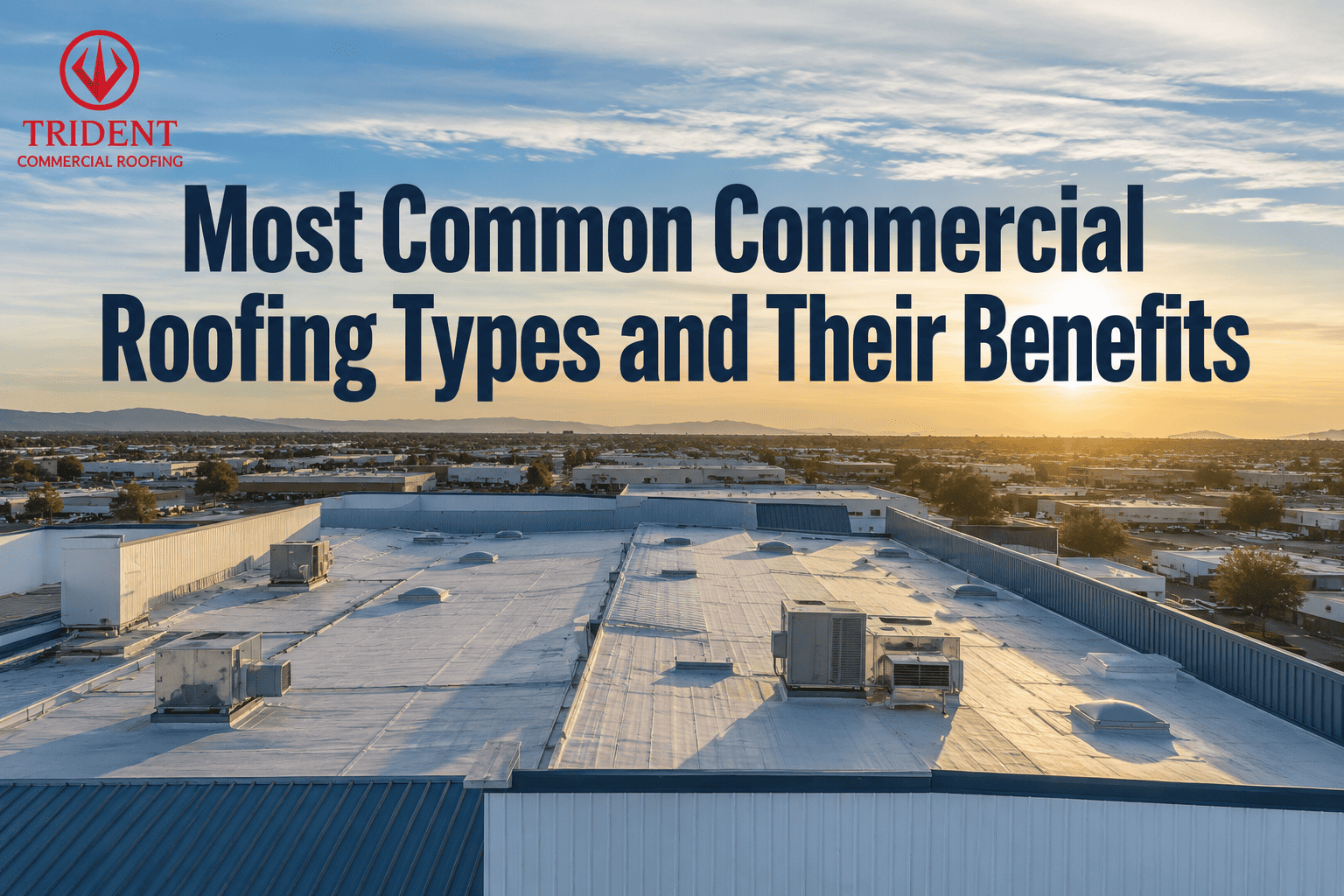
No business can survive without a solid barrier in the face of the elements. If you operate an office, retail store, or industrial warehouse, you should understand the most common commercial roofing types, as flat commercial roofs remain one of the most popular choices today. While it is a piece of cake for sloped residential roofs to resist pooling, flat roofs must be engineered to prevent water from pooling.
This is a very specific problem that modern commercial roof systems are designed to address. The right system protects your stock, employees, and business without damaging itself or affecting the building’s structure.
Other Commercial Roof Types and Their Benefits
There is no one-size-fits-all product. There are several different types of commercial roofing solutions that property managers use to ensure they have the most cost-effective option, the highest resistance to the weather, and one that performs well for their business.
TPO Roofing (Thermoplastic Polyolefin):
Today, the most popular commercial roof is a TPO roof. It is composed of a one-ply bright white membrane rolled out on the deck.
Main Benefit:
The main benefit of TPO roofing is energy efficiency. The white surface absorbs UV rays and protects your building from them. This will lower summer cooling costs.
EPDM roofing:
EPDM is a thick, synthetic black rubber product that has been used for many years on commercial properties. Very strong and can withstand changes in temperature.
Main Benefit:
No other roofing material is so long-lasting or budget-friendly. EPDM is resistant to weathering, cracking, and tearing, and is good for colder northern regions.
Modified Bitumen (ModBit):
ModBit roofs are a mixture of asphalt and plastic or rubber polymers that are formed into sturdy multi-layered sheets.
Main benefit:
Highly puncture-resistant. ModBit is able to handle foot traffic without leaking, in case you need to install HVAC systems in heavy-traffic areas.
Choosing Your Custom Commercial Roofing Solutions
Professional advice is needed to choose between TPO roofing and EPDM roofing. The decision between the two hinges on the weather, initial budget, and long-term building objectives. Your roofing contractor will examine your current roof and give you the best solution to fit the property.
You can weigh in on the benefits of each flat commercial roof to choose what suits your business needs and budget the best.
Final Thoughts
The roof of your building is a long-term investment that plays a major role in protecting your business. Whether you choose reflective TPO to improve energy efficiency or durable EPDM for harsh weather conditions, selecting the right roofing system helps keep your property safe and secure.
Understanding the most common commercial roofing types makes it easier to choose a solution that fits your building, budget, and long-term goals. By working with a trusted commercial roofing contractor, you can invest in a roofing system that delivers reliable performance and lasting protection for years to come.
Frequently Asked Questions
What are the most common commercial roofing types?
The most common commercial roofing types include TPO, EPDM, and Modified Bitumen (ModBit). Among these, TPO is one of the most popular choices because of its energy efficiency, affordability, and long-lasting performance.
How long does a flat commercial roof last?
Commercial membranes used in most flat roofs typically last 15 to 30 years. Their lifespan can be extended with regular maintenance, proper drainage, and professional installation.
Which is better: TPO vs. EPDM roofing?
There is no single best option because each roofing system has its advantages. TPO reflects sunlight and helps reduce cooling costs in warmer climates, while EPDM performs exceptionally well in colder regions due to its flexibility and weather resistance.
How do I choose the right commercial roofing type?
The best choice depends on your building’s design, local climate, budget, and long-term goals. Understanding the most common commercial roofing types and consulting an experienced commercial roofing contractor can help you select the right system for your property.
Is it possible to repair a flat roof, or is replacement always necessary?
If the damage is limited and the insulation remains dry, repairs or patching are usually enough. However, if moisture has spread through multiple layers of the roofing system, a full replacement may be the better long-term solution.